Conformal Prediction: From Images to Agents
Abstract
I will introduce and explore conformal prediction (CP) as a flexible framework for quantifying uncertainty and providing statistical guarantees on correctness across diverse machine learning applications. In a nutshell, CP transforms point-predictions into set-predictions, where larger sets indicate greater model uncertainty. CP is a highly practical framework because it is distribution-free, valid in finite samples, and makes very few assumptions about the data or predictor. I will cover how CP can be applied to standard usecases like image classification, including the human aspect of how prediction sets can be used in downstream tasks, then tackle more complex applications based around language models and agentic systems.
Biography
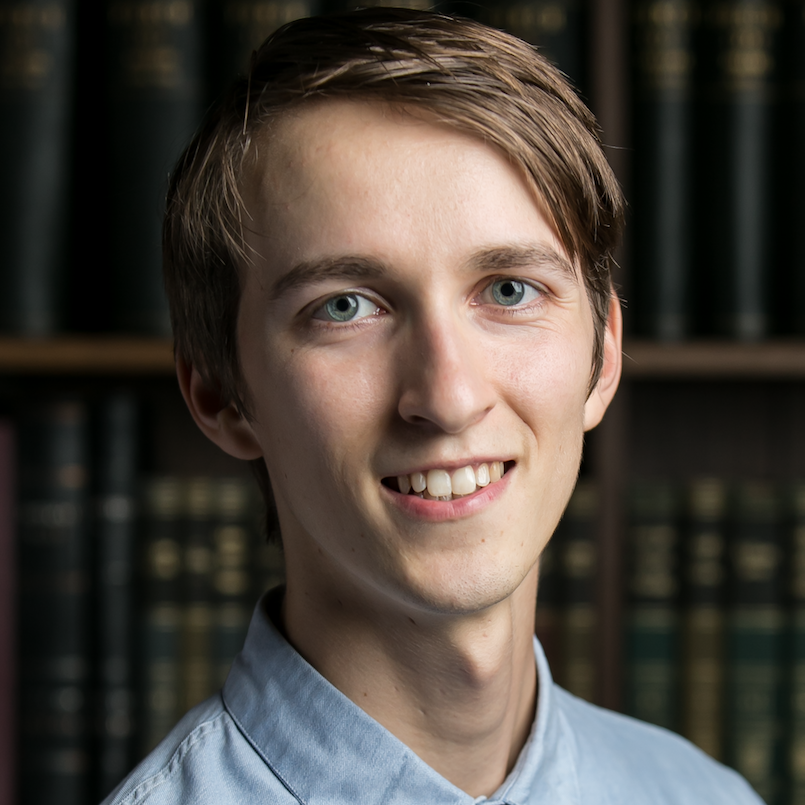
Jesse Cresswell is a Staff Machine Learning Scientist at Layer 6 AI, TD Bank's machine learning research lab, where he leads the team working on Trustworthy AI. Jesse holds a PhD in theoretical physics from the University of Toronto, but has worked exclusively on machine learning since 2019. As a researcher, Jesse has expertise in fairness, privacy, explainability, as well as more modern aspects of trust for GenAI applications like memorization, hallucination, and uncertainty quantification.
Artificial Intelligence for Music, from Audio to Video, from Cyber to Physical
Abstract
This seminar explores how AI-embedded tools can enhance individual practice and performance for string professionals and students. We discuss requisite technologies such as: audio input analysis, error detection, dynamic and tempo estimation, posture and instrument advising. These capabilities enable AI to provide measurable benefits to musicians and generate genre-specific visual content, addressing two key research questions: (1) When can AI technology improve professional practice and performance? (2) What factors influence musicians' acceptance of AI? AI has made impressive progress in forms of images, audio, video, and text. AI's future challenges lie in moving from cyberspace to physical space. The second part of this seminar presents a novel MIDI-to-motion conversion for robotic cello performance. This method converts musical input into bowing trajectories without expensive motion capture. Our approach achieves human-like sound and contributes labeled robotic performance data to the research community. To evaluate this method, humans are invited to compare the sound produced by the robot and by humans.
Biography
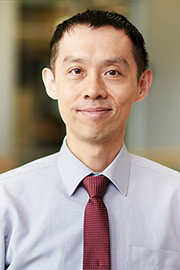
Yung-Hsiang Lu is a professor at the School of Electrical and Computer Engineering in Purdue University, West Lafayette, Indiana, U.S.A. He is the director of Purdue Engineering Honors Program (2025-present). He was the inaugural director of Purdue John Martinson Engineering Entrepreneurial Center (2020-2022). He is a University Faculty Scholar of Purdue University. Dr. Lu is a Fellow of IEEE, Distinguished Visitor of the Computer Society, Distinguished Scientist and Distinguished Speaker of the ACM. He is one of the editors of the book "Low-Power Computer Vision - Improve the Efficiency of Artificial Intelligence" (ISBN 9780367744700, published by Chapman & Hall in 2022).
Prof. Kristen Yeon-Ji Yun
Purdue University
https://www.cla.purdue.edu/directory/profiles/yeon-ji-kristen-yun.html
Biography
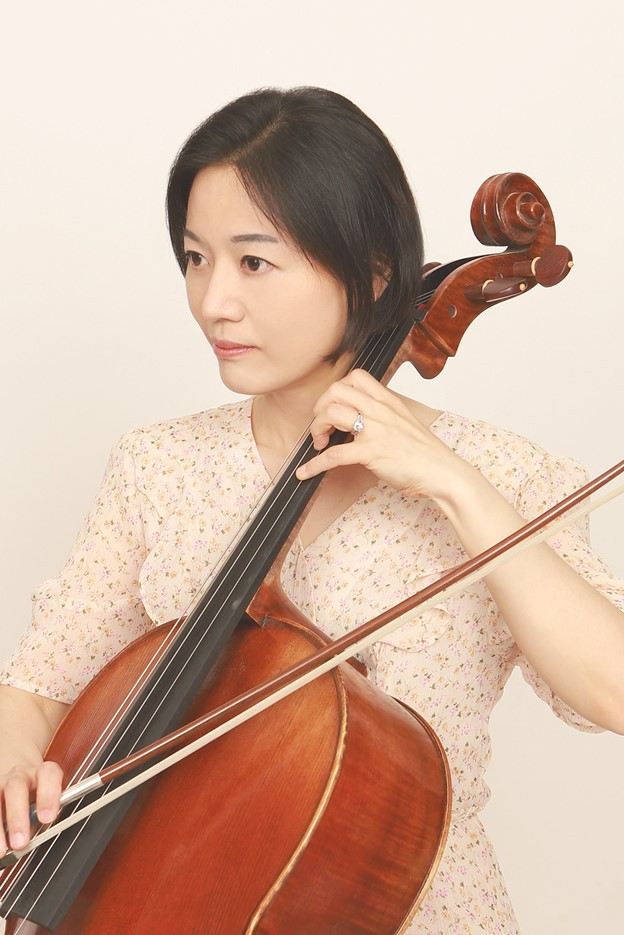
Kristen Yeon-Ji Yun is a clinical associate professor in the Department of Music in the Patti and Rusty Rueff School of Design, Art, and Performance at Purdue University. She is the principal investigator of a research grant IIS-2326198 from the National Science Foundation on the topic "Artificial Intelligence Technology for Future Music Performers". She is active as a soloist, chamber musician, musical scholar, and clinician. Dr. Yun has toured many countries including Spain, France, Italy, Taiwan, Germany, Mexico, Japan, Malaysia, Thailand, China, Hong-Kong, and South Korea giving a series of successful concerts and master classes. She is a winner in numerous competitions around the world. Yun performs on a French cello, made by Guersan in 1766.
Advancing accelerator based science with Machine Learning and Quantum Computing at TRIUMF
Abstract
TRIUMF is Canada’s particle accelerator centre with a rich on-site programme in nuclear physics, particle physics, accelerator physics, material sciences and life sciences. It also serves as Canada’s hub for Canadian scientists to participate in large global science endeavours like these at the CERN’s Large Hadron Collider in Europe or large neutrino Experiments (Super-Kamiokande, Hyper-Kamiokande) in Japan. I will take the audience on a tour, highlighting how applications of modern and traditional Machine Learning enhance science outcomes at the lab. We will also glimpse how quantum computing can be presently utilized to give a us an edge today in select cases.
Biography
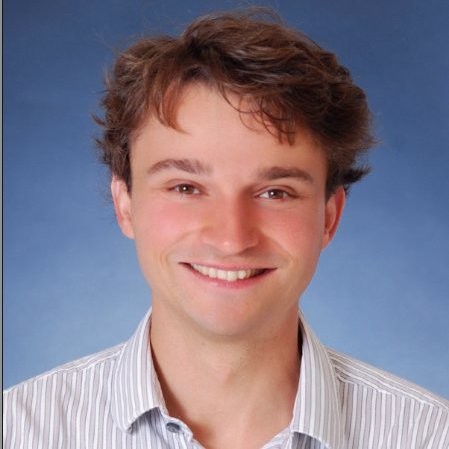
Dr Wojciech Fedorko completed his undergraduate studies at University of Toronto in Physics Mathematics and Computer Science. He completed his doctorate in physics at the University of Chicago (2008), Where he developed real-time data processing systems and studied properties of the top quark at the CDF Experiment at Fermilab’s Tevatron. He then joined the ATLAS Experiment with fellowships and postdoctoral posts at CERN, Michigan State, and UBC. He now serves as TRIUMF’s Deputy Department Head for Scientific Computing concentrating on ML applications to many branches of science pursued at TRIUMF.
From Research to Reality: Four Lessons for Lasting Impact in Robotics
Abstract
Robotics may be in the spotlight, the real challenge is in building systems that truly work and scale. Ryan has spent the entirety of his professional and volunteer career building and scaling robotics organizations, and he’s learned firsthand what separates fleeting hype from real impact. He’s going to share four things everyone needs to know about successful robot companies, no matter if you're looking to found one or join one. Trends in R&D, product development, sales, and, of course, raising money are all going to be covered. By the end of this talk, you’ll have practical insights to help turn your research and ideas into robots that will make a difference in the real world.

Biography
Ryan Gariepy is the Vice President, Robotics for Rockwell Automation and leader of Rockwell’s Robotics Center of Excellence. He was one of the founders of Clearpath Robotics in 2009 and OTTO Motors in 2015, and was instrumental in Rockwell Automation’s acquisition of the companies in 2023. Ryan is a board member of Open Robotics, co-founder of ROSCon, and co-founder and chair of the Canadian Robotics Council. Ryan is also a senior member of the IEEE, holds over 100 granted and pending patents in the field of autonomous systems, and is a leading angel investor in robotics companies worldwide. He has received the CIPPRS Lifetime Achievement Award, the IEEE/IFR Innovation & Entrepreneurship in Robotics and Automation Award, and is featured in "A Startup Field Guide in the Age of Robots and AI." Ryan holds a B.A.Sc. in Mechatronics Engineering and a M.A.Sc. in Mechanical Engineering from the University of Waterloo.